
Development
Community Development and Enhancement 
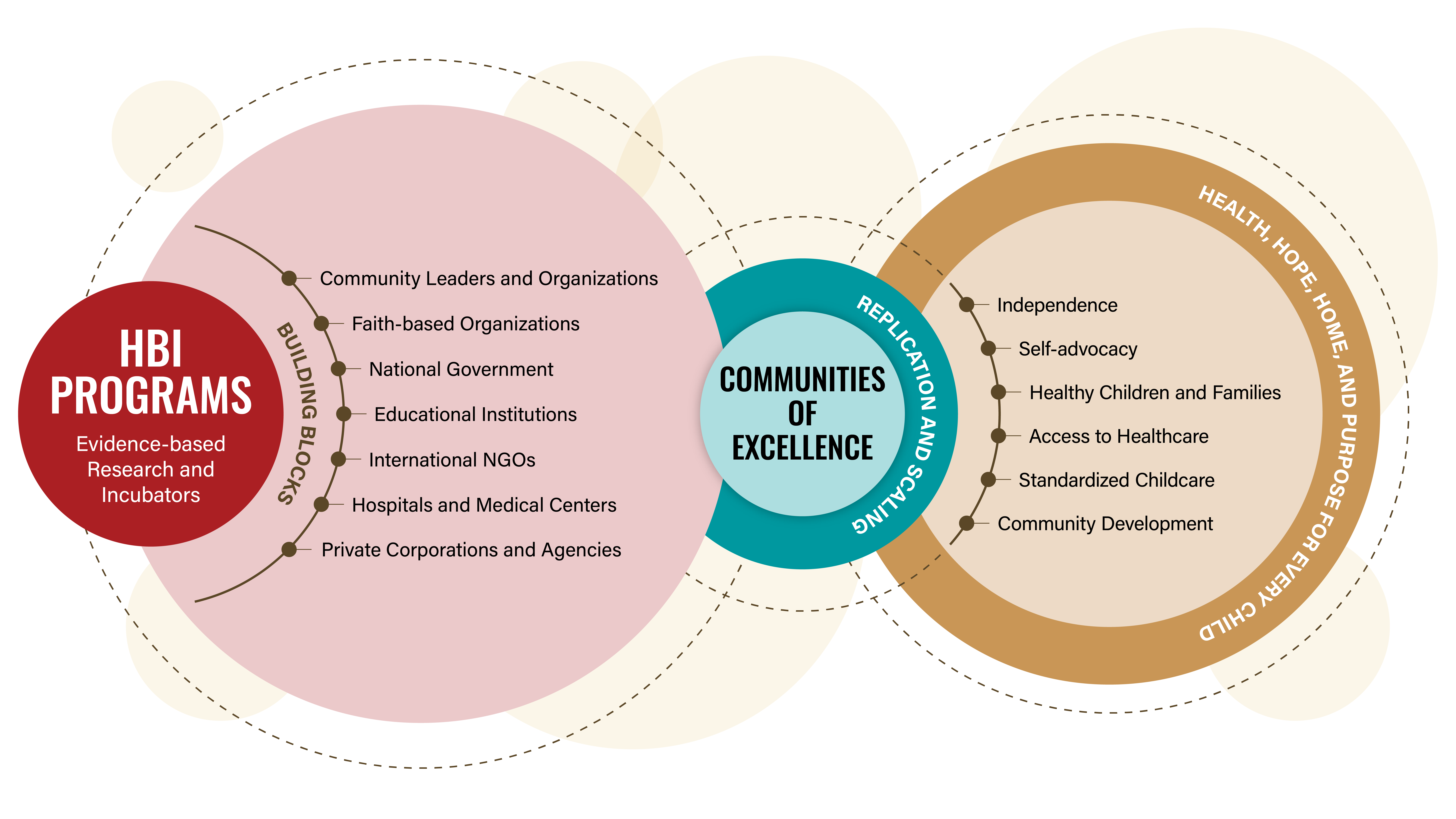
HBI is committed to community development and evidence based medical and health care outreach projects. Our community outreach projects work to bring desperately needed infrastructure development to areas of need.
Our projects are focused on clean water, micro-business development and novel healthcare outreach programs and projects for vulnerable groups. We work to ensure that communities are involved in all aspects of our development and only work in areas where there is on-going in-country support. In addition, HBI will not work in a community unless we are asked by a local consortium or group to participate. Our goal is sustainable, culturally sensitive projects and programs that are in the best interest of those that we are fortunate to serve and to the areas where we are asked to work.
We are available to assist groups and individuals as they develop their outreach programs to Latin America. Please contact HBI at This e-mail address is being protected from spambots. You need JavaScript enabled to view it for more information
Communities in developing countries face many challenges which require an integrated approach in order to better the health and general living conditions of these terribly underserved areas. Health Bridges International (HBI) acts as a facilitator, working in close collaboration with in-country partners, to address a wide range of needs. Some of the current projects and programs of HBI include –

New Projects
Third Annual Arequipa Health Care Conference and Training Symposium
Bogota, Colombia Consulting (PDF file)
Union Biblica SAVE Project (PDF file)
PACE Research 2008 (PDF file)
The Third Annual Arequipa Health Care Conference and Training Symposium
In keeping with the organizational mission to provide opportunities and programmatic responses for in-country organizations and individuals, Health Bridges International, Inc. developed and produced the “First Annual Alto Cayma Medical Conference and Training Symposium” in April of 2008. The training, facilitated through a dedicated group of volunteer healthcare professionals from the United States and Peru, was a two-day intensive learning experience with both didactic and hands-on instruction. Over 30 invited participants enrolled in the various workshops and didactic lectures – with the highlight of the event being the informal networking conversations and exchanges that developed during the program breaks. Overwhelmingly conference participants rated their attendance at the event as a great success.
Now, in 2010, we are into our Third Annual Conference with a focus on Urgent and Emergent Medical Care. The main purpose of the conference is to unite young Peruvian medical and healthcare professionals who are enthusiastic and passionate about working with underserved communities. The symposium will bring together energetic young professionals and top presenters to create an environment for learning and sharing. HBI is dedicated to supporting and mentoring the next generation of “change agents” in communities and countries of need, the “Third Annual Arequipa Health Care Conference and Training Symposium” will help to bridge in-country providers with North American volunteers to create collegial exchanges and opportunities for mentoring, professional development and knowledge and skills acquisition.
Conference Objectives:
- Supply a mechanism for our in-country partners to recruit more healthcare providers to volunteer
- Unite several Non-Governmental Organizations around a common purpose and project
- Train healthcare providers for marginalized and underserved populations in new equipment donated from U.S. suppliers
- Develop unity and collaboration between young healthcare professionals passionate about working with marginalized communities and populations
- Support future healthcare leaders in developing countries to extend their knowledge and skills
Project Water Filtration System
Background: There is an extreme shortage of clean water in most Peruvian communities. Few families have an adequate supply. The cost of potable water in some of the most impoverished communities of Peru is as much as US$3 per cubic meter (approximately 260 gallons). In a country where more than 40% of the population earns less than $2 a day, the cost of clean drinking water has had serious negative impacts on the overall health of a community. Families are forced to make difficult trade-offs between clean water, food, school and healthcare fees when managing a meager household budget.
From very humble beginnings, a water purification project was started by the Synod of Living Waters of the Presbyterian Church USA. The system that was designed and is continually being improved by a group of water treatment engineers through a program entitled Living Water for the World, and has now been installed at 114 sites in Mexico, Guatemala, Brazil, Honduras, Haiti, Belize, Nicaragua, El Salvador, India, Ghana, Philippines, the Dominican Republic and Peru. It is the proposal of HBI that such units be purchased for placement in a variety of underserved regions in Peru and Latin America. Each unit will have a capacity to provide 300 gallons of clean water per hour, and will be held in a trust by the community to provide clean, potable water for the entire area. read more....
Kusi Project Report
2007 Medical, Dental and Social Outreach to Ancash
What started as a dream has come fully to fruition. It has been a great goal of Health Bridges International (HBI) to develop projects and programs that are lead by and staffed with in-country professionals and partners. Our November outreach to the District of Ancash in Peru was just that – a Peruvian medical and dental campaign staffed with almost exclusively Peruvian providers.
The HBI medical and dental outreach campaign in November of 2007 was truly a life enhancing experience. For almost 10 years I have dreamed of putting together a healthcare outreach program in Peru that was lead by Peruvian doctors and facilitated in an extremely underserved area. This past week allowed that dream to become a reality. In just under 5 days of clinic – our team of healthcare providers served almost 1,200 patients! Patients came from a wide geographic area to seek care – some walking for as long as 6 hours. Story after story gave witness to the immense need for a non-governmental healthcare presence in the area.
The primary mission of the campaign was to support the on-going work of Union Biblica del Peru (See: http://www.unionbiblicaperu.org/) in their projects with homeless and abandon children. We operated our clinic out of a facility they have constructed in the hamlet community of Caraz. Our focus was the demonstration of a clinic outreach model. The long term goal and hope is that Union Biblica can secure funding from a mining consortium to develop a permanent medical center at their Kusi camp. Our role in this project was to demonstrate a fully effective medical and dental clinic model – so that Union Biblica can request funds. We were merely acting as a facilitator for a much bigger project that will be driven by our Peruvian non-governmental organization partner Union Biblica del Peru.
Our team was made up of 6 physicians, 3 dentists, 3 nurses, 2 pre-medical students, 1 dental student, a social worker and a law student (what an eclectic group). We hoped to help to connect patients to longitudinal care in the Ancash area by working with the Ministry of Health and EsSauld (the Peruvian social security bureau). Our hope was that we could help to create a permanent “safety net” clinic for the community of Kusi and the people of Ancash. Our goal was the development of sustainable partnerships that create lasting change for underserved communities.
The Union Biblica del Peru camp, named Kusi after the local Quechuan word for “happy,” was the perfect environment for our team to immerse themselves in the service of giving. We stayed in the dormitory houses of the camp and ate our meals with the abandon street boys from the orphanage. Each day we learned about one another, we learned about giving selflessly and we learned about working as a team. By the end of our week stay – we were a finely honed “machine;” completely dedicated to making a difference in the lives of the patients we cared for in the clinics.
A very important aspect of the clinics was the simple fact that the Peruvian care providers were extraordinarily knowledgeable about the needs of the people, the prevalence of local diseases and the access (or lack there-of) to on-going care and resources. They were the true “bridge” to ensure that the people we served in our clinics gained referrals and information about ways to get their basic healthcare needs met long after our team left. The Peruvian care team was also very supportive in teaching and training our three North American providers in how to best care for Peruvian people. The team truly came together under one very important mission – serving one another and being present to the needs of those all around us.
In the end, this medical and dental outreach campaign was truly about planting the seeds that will one day mature into a sustainable model of healthcare delivery for the community of Kusi and the region of Ancash. The foundational step of demonstrating that a true need exists in this region (as verified by the number of patients served and the diverse geographic region that patients traveled to seek care) and the fact that Union Biblica del Peru has solid roots in the community – make the development of a permanent medical and healthcare center a natural “next step” venture.
Download Kusi Project Report (PDF file)
Project: Alto Cayma Nutrition Program
Background: The St. Teresa of Calcutta Parish in Alto Cayma, Peru run by Father Alex Busuttil currently provides meals to 800 people per day. There are an estimated 34,000 people in this poor parish and the need for daily feeding programs is closer to 5,000 people per day. The nutritious meals are provided mainly to children and the elderly. Food is prepared in one large kitchen, and delivered to various distribution points throughout the settlement. In some instances, meals are delivered directly to the homes of elderly and medically fragile individuals in a “Meals on Wheels” model of care facilitation.
The cost of the feeding program has risen dramatically in the past year. It costs almost $150 per person per year to provide 2 nutritious meals per day – 5 days per week. The current kitchen has a capacity for up to 1,000 meals per day. A second kitchen would be built on property owned by the non-governmental organization (NGO) Sirviendo Logrando Paz (a collaborative partner with the Mission of Alto Cayma); and will dramatically increase capacity. The new kitchen will provide feeding services to an expanded population of over 2,500 people per day.
Request of HBI:
- Raise $15,500 to bring current kitchen facilities to full capacity within the next 12 months.
- Hire the staff and maintain a database and fundraising program to maintain kitchen operations at 1,000 meals per day capacity, approximately $40,000.00
- Raise funds to build second industrial kitchen to increase feeding capacity to almost 2,500 meals per day, estimated at between $115,000-125,000.
- Purchase an additional vehicle for food distribution - $24,000 (Mitsubishi passenger van).
Ines: A Special Child, An Important Project
Update June 2008
In the spring of 2006, during a medical outreach campaign – Ines Sulluchuco Human was introduced to Health Bridges International (HBI). The beauty of this little girl “infected” our staff from the very moment they met. The opportunities to learn and grow from one another have continued to this day. Ines was born with an incurable skin disease that has greatly limited every aspect of her life. The skin condition, known as Epidermolysis Bullosa (EB) –is an inherited skin disorder that is characterized by blister formation in response to mechanical damage. Even the simple act of walking causes trauma to her little feet that leads to a terrible cascade of blisters and pain. Ines has spent her entire young life in pain. Thanks in great part to the generosity and compassion of a group of dedicated ladies from Panama City, Florida – Ines has been able to access a wide variety of life saving opportunities. The Carmelite Prayer Group has committed to a monthly sponsorship program that provides Ines and her family access to nutritious food and increased calories, specialty dermatological consultations and care and expanded medicines and treatment. The sponsorship program, run in partnership with the Anglican Church of Peru works to build sustainable “bridges of opportunity” between medically fragile children and healthcare providers. The program works to share hope.
In June an HBI team made a house call to visit Ines and her family. Nestled high in the arid hills of the squatter community of Pamplona Alta – on the outskirts of Lima – Ines and her family share a small two room home with her only sibling. A home without heat, running water or a bathroom. A home that was no windows and little more than a piece of corrugated aluminum for a roof.
The trek to the home was anything but easy – with rocky soil and uneven terrain making every foothold a bit treacherous. However, once inside the home, the team was delighted to learn that the day of their visit coincided with Ines’ fourth birthday.
In celebration of this lovely young girl’s life, the team sang songs and exchanged gifts with Ines and her family. Throughout the celebration, the laughter and the smiles were tempered by the obvious signs of pain expressed on the face of this beautiful little girl. For in spite of the fact that HBI has worked very diligently to gain Ines contact with a specialist who is well versed in the EB diagnosis – Ines has been unable to receive such care. It seems that the only specialist with such advanced skills in all South America lives in Santiago, Chile; just one country to the south of Peru – but a world away, from the economic constraints of the Sulluchuco Human family.
What our team learned from their home visit with Ines is helping to drive a new level of focus for our sponsorship program and for expanded projects with other children. A focus that HBI hopes will lead to a more profound impact in the lives of medically fragile and special needs children.
A few critical “next steps” that have been identified include:
- Helping to organize a support group for the families of special needs children; in particularly for children with the EB diagnosis (although a rare diagnosis – the limited access to care in Peru means that all families dealing with the EB diagnosis must seek care from a single facility. Information from the head pediatrician at the hospital indicates that there is a cohort of some 5-7 children with the EB diagnosis in Lima).
- Convening a clinic for all the children with an EB diagnosis in Lima to be evaluated by the specialist from Chile. The intention is to raise the funds necessary to bring a physician from the EB advocacy organization in Santiago to Lima to consult on the patients seen at the Hospital el Nino’s. In addition, a small training symposium would be developed to allow Peruvian dermatologists and specialists to learn from the Chilean EB specialist and leverage that training toward the care of Ines.
- Developing a “Center of Excellence” to train Peruvian physicians and healthcare professionals in the art and science of care for medically fragile children. The center – developed in conjunction with the largest hospital for children in Lima and the Anglican Church of Peru; will house a therapy center, a consultation center for specialty care referrals, a training center for Peruvian providers to train and learn, and an advocacy center where families and patients can receive compassionate support for their health and psychosocial needs.
Download Ines Update (PDF file)
Download Ines Project 2008 (PDF file)
Nutrition and Feeding Program
Background: The Alto Cayma Mission in Arequipa, Peru run by Father Alex Busuttil currently provides meals to 650 people per day. There are an estimated 31,000 people in this poor parish and the need for daily feeding programs is closer to 5,000 people per day. The nutritious meals are provided mainly to children and the elderly. Food is prepared in one large kitchen, and delivered to various distribution points throughout the settlement. In some instances, meals are delivered directly to the homes of elderly – in the “Meals on Wheels” model of care facilitation.
The cost of the feeding program is $50 per person per year. The current kitchen has a capacity for up to 800 meals per day. A second kitchen would be built on a new property and will dramatically increase capacity. The new kitchen will provide feeding services to an expanded population of over 2,500.
Street Youth Drop in Center
Background: There are approximately 50,000 children working on the streets and as domestic help in Arequipa. They range in age from 4-15 years old, both boys and girls. Drug use, prostitution, organized crime, various types of abuse and exploitation exist. Roberto Cervantes is a teacher who has organized 17 volunteers made up of teachers, social workers, a physician and a lawyer to educate and advocate for these children. He works in the streets, the prisons, and the orphanages of Arequipa. He himself was a child working in the mines of Peru. He and Father Alex partner in these outreach efforts
In collaboration with Roberto Serviendo Logrando Paz, HBI plans to develop and administer a drop-in center and abandoned youth advocacy center in downtown Arequipa. The project will operate in partnership the local municipality, the Catholic Archdiocese of Arequipa and international NGO’s to provide comprehensive services to homeless and underserved youth.
Community Senior Center
Background: There are thousands of underserved and dependent seniors in the Alta Cayma area. There are very few government programs or social safety net projects for the elderly. Especially in the settlement community of Alta Cayma, these seniors are cut off from family and community that might otherwise care for them. They need social interaction, meals, health care, and some help with the activities of daily living. Currently the Mission of Alto Cayma provides: (1) a weekly meeting of the elderly, (2) limited meals on wheels and (3) limited social worker visits. HBI is working to secure funding to enhance the operations and programming of the Mission of Alto Cayma and develop a new senior center.
Automobile Battery Recycling Project
Background: Throughout the peri-urban slum communities of Lima, people are burning automobile batteries for the smelting of lead. These invasion settlements (referred to as Pueblos Jovenes – young towns) make up a significant amount of the total population of Lima; and many of the residents of Pueblos Jovenes areas survive on less than $2.00 US per day. For many their primary source of income is the recycling of garbage and industrial waste. A major issue facing these waste recycling communities is the open pit incineration of industrial plastics and automobile batteries. Through the liberation of lead in the incineration process, children living in impoverished areas have suffered extensive adverse health affects. Overwhelmingly, the greatest need is a more formal plan for reducing the amount of lead exposure and intoxication. Equally compelling is the need for a more concerted treatment and laboratory tracking program. HBI is working to create a collaborative solution to the issues of the environmental exposure to lead.
Kids2Kids Project
Background: Children around the world face challenges that compromise their health, well being and personal development. While many of the underlying problems reflect the poor economic status and cultural norms that their parents inherited, many can be prevented or corrected. However, when attention is not paid to these issues, the children are typically destined for lives that mirror those of their parents.
HBI believes an important way to address these challenges is to create connections among children, as well as with their families and their communities. Kids2Kids is a program that works to create bridges (collaborative relationships) that promote and facilitate health and well being of children and their environments. By bridging gaps between children from different communities, cultures, social classes and financial conditions, HBI intends to create a caring, compassionate link between the future leaders of this planet.